Glock Police Trade-In Guide
Glock pistols are the most common police sidearm in the United States, so they are also the most common police trade-in. Departments replace pistols on a schedule, when they change calibers, or when a new generation arrives. The old guns usually go back through a distributor and end up for sale. This guide explains the terms you will see on trade-in listings, how to tell the generations apart, and what to look at before you buy.
Start with the terms
Trade-in listings use a handful of phrases that sound alike but mean different things.
- LE trade-in or police trade-in. The pistol was owned by a law enforcement agency and traded back, usually toward new guns. It may have been carried daily for years, or it may have sat in an armory. Condition ranges from worn to near new.
- Never issued. The agency bought the pistol but never assigned it to an officer. It may still show storage marks or light handling. "Never issued" is a claim from the seller or distributor. Look for supporting signs: no holster wear, crisp finish, sharp edges.
- Refurbished or remanufactured. Someone replaced parts or refinished the gun after it left the agency. That may be Glock, a distributor or a gunsmith. What was done varies a lot. Ask what was replaced.
- Blue Label. This is not a condition. Blue Label is a Glock program that offers pistols to qualifying buyers, such as sworn law enforcement, military members and some first responders, through participating dealers. Eligibility rules and proof requirements are set by Glock and change from time to time. A used gun first bought under Blue Label is still an ordinary used Glock once resold.
The models you will see most
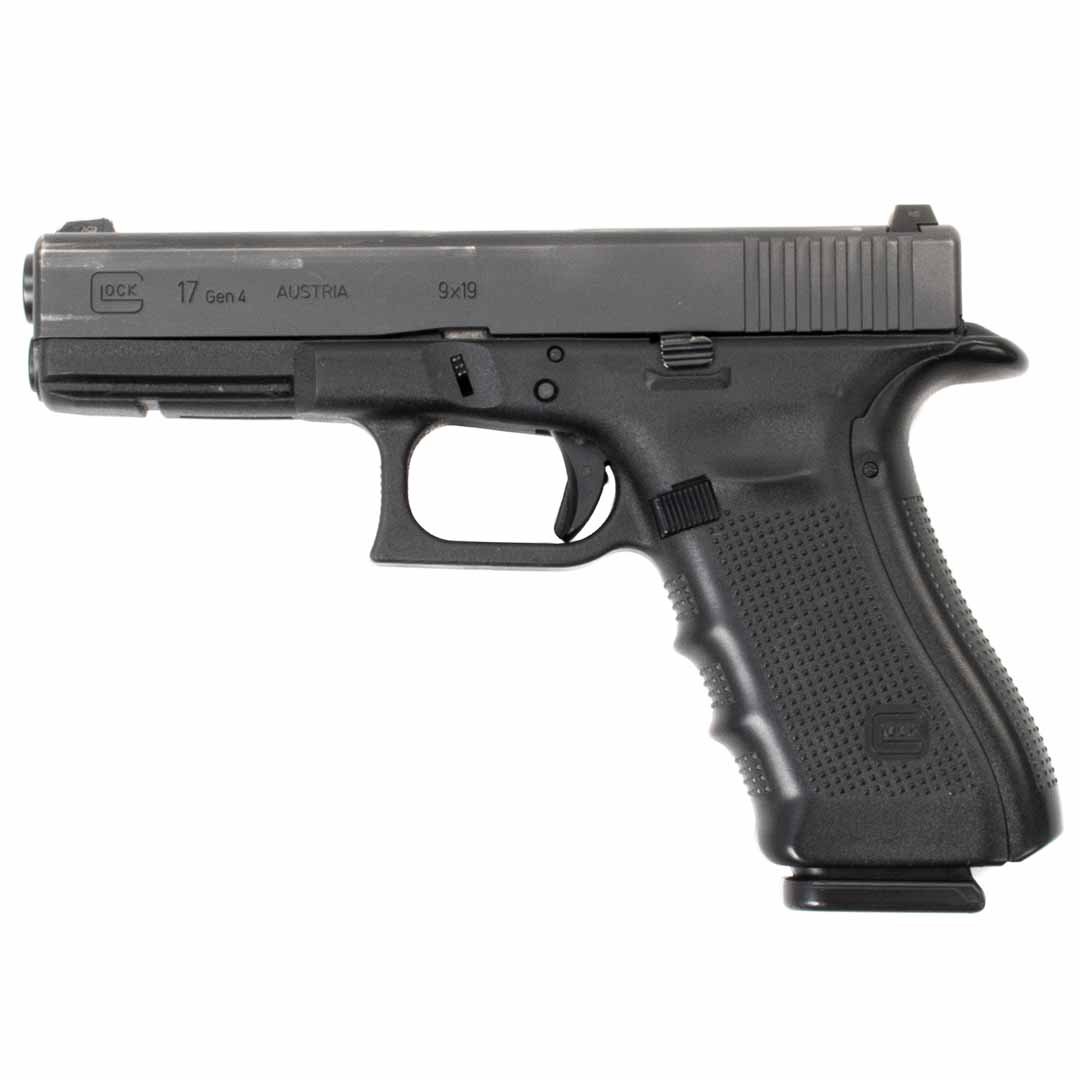
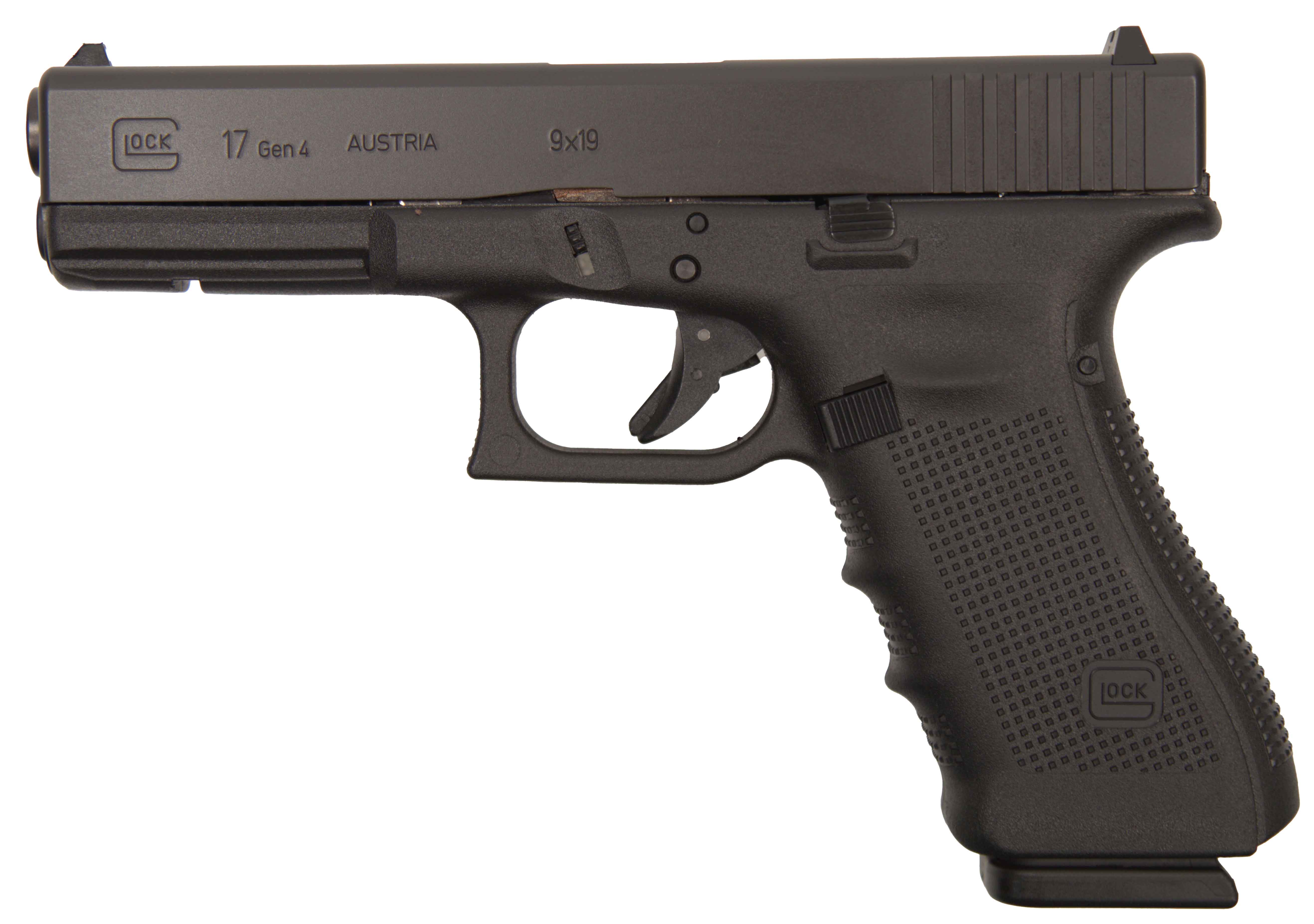
- G17: full-size 9mm, 17-round standard magazine. The base model.
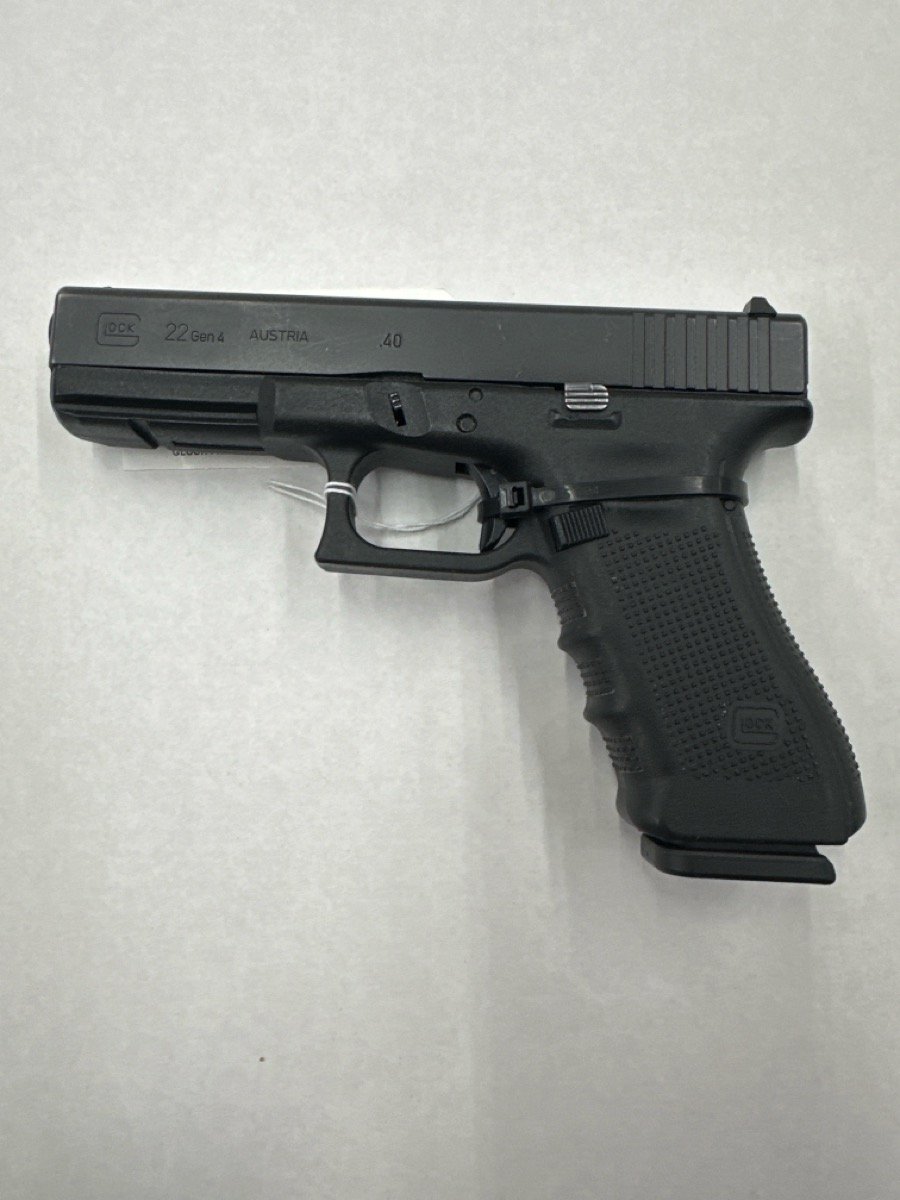
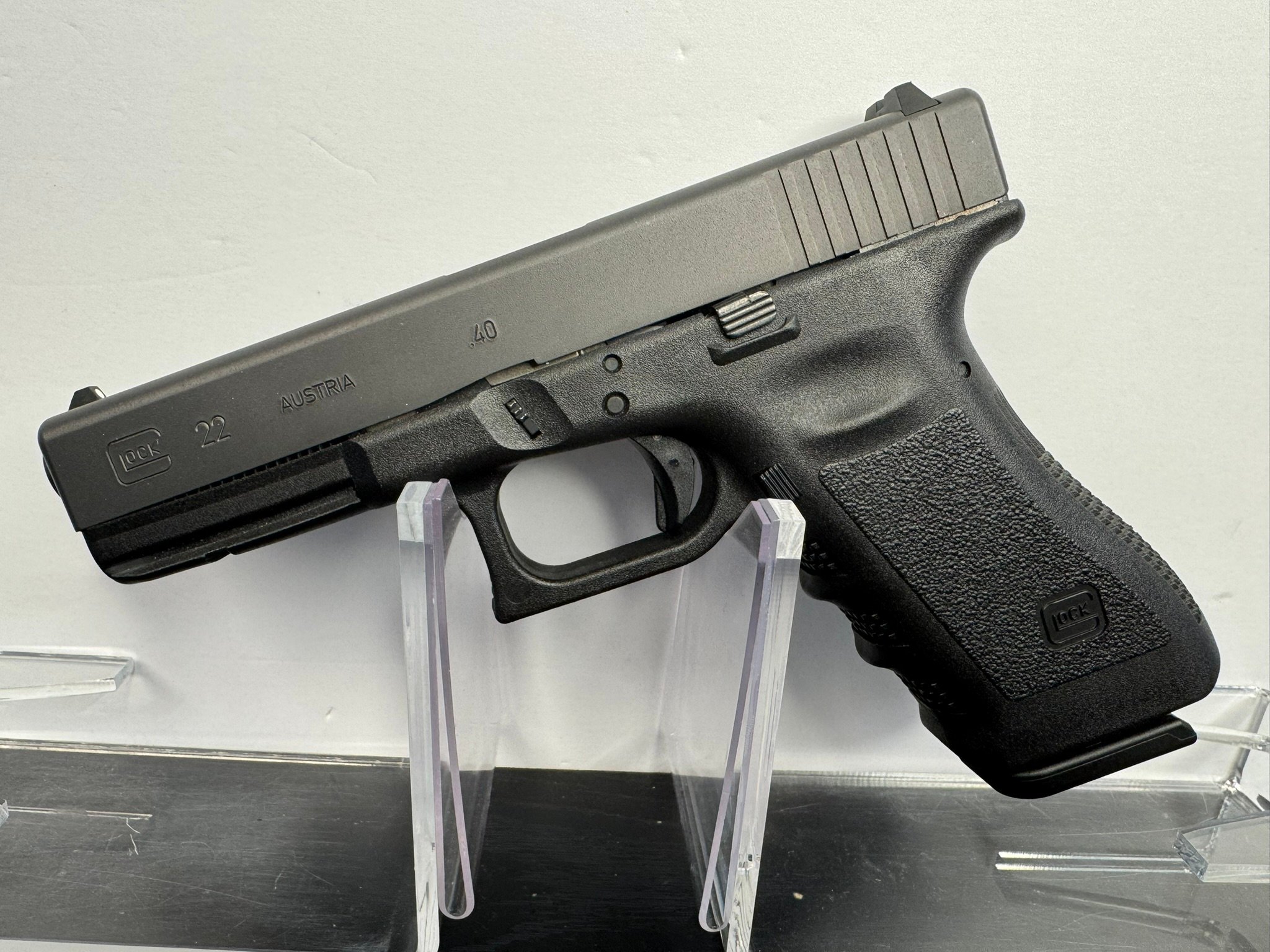
- G22: full-size .40 S&W, 15 rounds. For many years the most common police Glock.
- G23: compact .40 S&W, 13 rounds. Popular with detectives and as a backup.
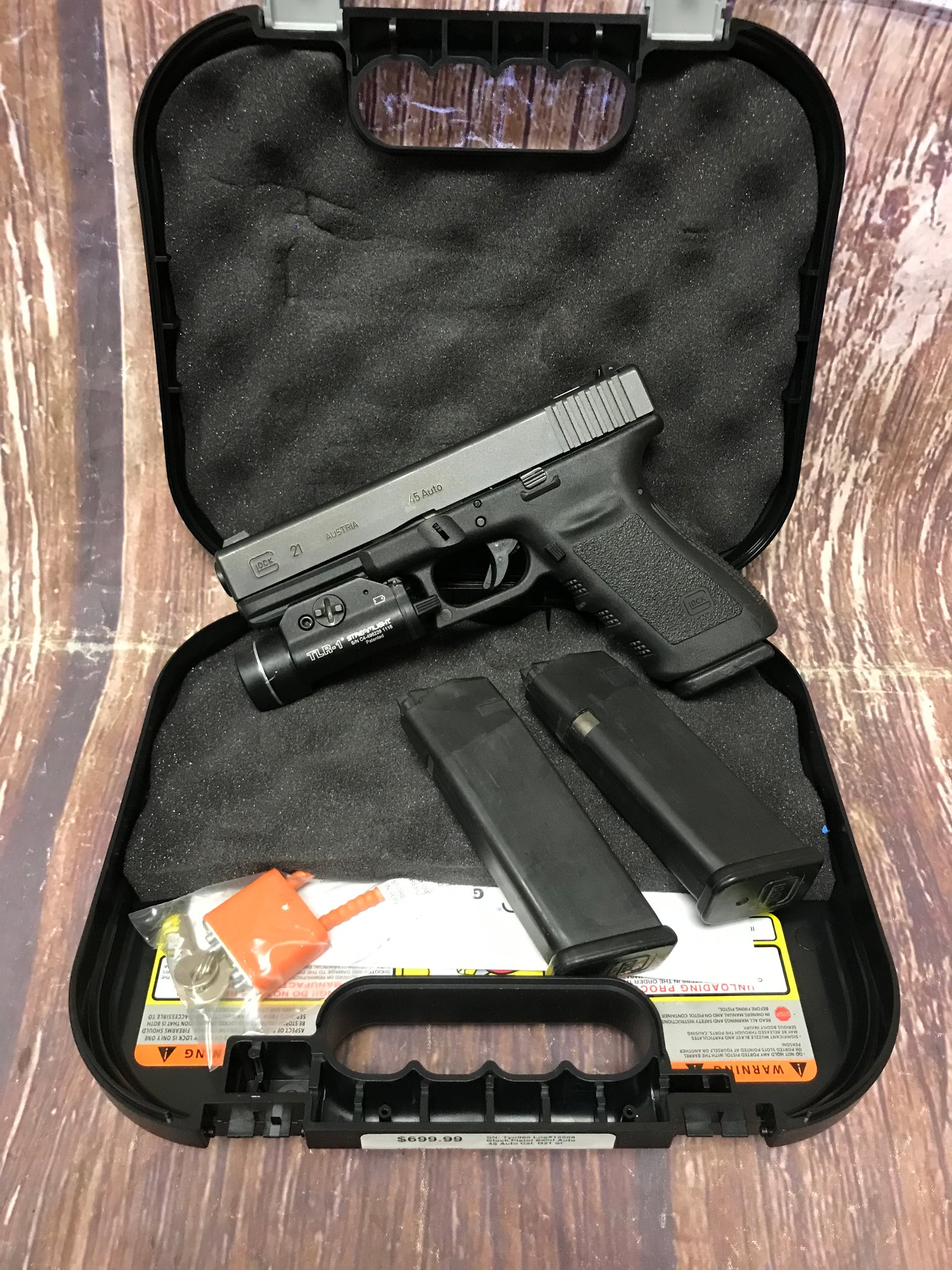
- G21: full-size .45 ACP, 13 rounds. Larger grip. Used by agencies that wanted .45.
- G19: compact 9mm, 15 rounds.
- G45: 9mm with a full-size grip and the shorter G19 slide. Introduced in 2019 as a Gen 5 model, and adopted by a number of agencies.
Telling the generations apart
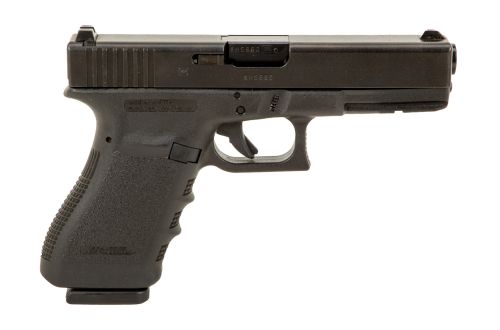
Most trade-ins today are Gen 3, Gen 4 or Gen 5. The generation is often marked on the slide for Gen 4 and Gen 5. Gen 3 guns carry no generation mark. These features help you tell them apart.
Gen 3
- Finger grooves on the front strap and thumb rests on the sides of the frame
- Accessory rail under the dust cover
- Single recoil spring on a guide rod
- Small magazine release, not reversible
- No backstrap inserts
Gen 4
- Rougher grip texture
- Interchangeable backstraps to change grip size
- Dual recoil spring assembly
- Larger magazine release that can be moved to the right side
- "Gen4" marked on the slide; introduced around 2010
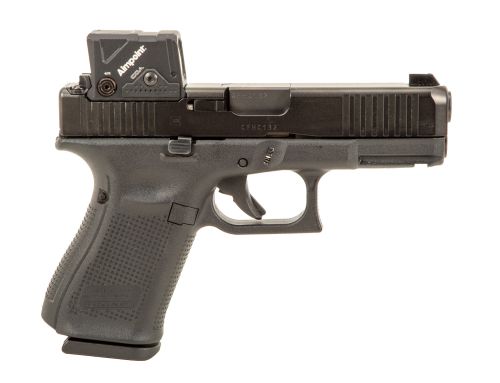
Gen 5
- No finger grooves
- Flared magazine well
- Slide stop lever on both sides
- Glock Marksman Barrel with a different rifling style
- Different slide finish; many have front slide serrations
- "Gen5" marked on the slide; introduced around 2017
In late 2025 Glock announced a new V series and discontinued many earlier commercial models. Earlier generations stay common on the used market, and Glock has said it will keep supporting discontinued models with parts and service. Check Glock's own site for current details.
.40 vs 9mm trade-ins
Many American agencies adopted .40 S&W in the 1990s and 2000s. Over the last decade, many moved back to 9mm. That shift is a big reason so many .40 Glocks, mostly G22 and G23, are on the market. For a buyer, that can mean good supply and lower prices on .40 guns compared with the same model in 9mm. Check current listings for real numbers.
Which to choose comes down to use. 9mm ammunition costs less and recoils less. .40 S&W carries a bit more energy and is still widely available. A G22 and a G17 are about the same size, so holsters often fit both. Barrels made to convert a .40 Glock to 9mm exist. A gunsmith can tell you whether that makes sense for your gun.
Night sights and other upgrades
Agencies often order tritium night sights. Tritium dims with age. Its half-life is about 12.3 years, so a set from 2012 gives off roughly half its original light. Dim sights still work as regular sights, but they lose their low-light value. Some trade-ins also come with agency-installed parts, such as extended slide stops, different magazine releases or different trigger parts. The listing may not mention them, so look closely at photos. A stock trigger is easier to service and resell.
One magazine or three
Duty Glocks were usually issued with three magazines: one in the gun and two on the belt. Trade-ins are sold with one, two or three, depending on the batch. The listing should say. Glock magazines are easy to find, but three factory magazines add real value to the deal.
Magazines fit across generations with one catch. Gen 4 and Gen 5 magazines have a notch on both sides so the release can be moved to either side. Older Gen 3 magazines only work with the release on the left, which is the factory setting. Gen 5 magazines have an orange follower and generally work in Gen 3 and Gen 4 guns of the same model. Test-fit any magazine before you rely on it. If your state limits capacity, see our state law guide before ordering.
How to check a used Glock
Frame
Look at the polymer frame for cracks, especially around the rail and the trigger guard. Look inside at the locking block and the rear rail block. Light wear marks are normal. Cracks or deep gouges are not.
Slide finish
Holster wear shows on the edges of the slide and at the muzzle as bare or polished metal. It is cosmetic. Rust or pitting under the wear is a bigger issue. Check the breech face and the inside of the slide too.
Barrel
Look at the bore and the feed ramp. Glock barrels are hard-wearing. Heavy erosion or bulges are a reason to pass.
Function
With the gun unloaded, check the trigger reset. Pull the trigger, hold it, rack the slide, then let the trigger out. You should feel and hear a click. Check that the trigger safety tab blocks the trigger when not pressed. Check that the slide locks back on an empty magazine.
Springs and small parts
Recoil springs and magazine springs wear. They are inexpensive to replace. A Glock armorer can do a full parts check quickly.
Our condition guide covers wear patterns, markings and the questions to ask.
Agency markings
Some trade-ins carry engraved agency names, badges or property numbers. Collectors sometimes like them. Other buyers prefer a clean gun. Markings don't affect function. They are a matter of taste and resale.
Buying one here
Every pistol ships to the FFL dealer you choose, where you complete Form 4473 and the background check. See shipping and returns. We label a listing only with the condition its source states, such as "Used", "Police trade-in" or "New". We don't inspect or grade every gun ourselves.
- Browse all Glock pistols and Glock trade-ins
- Search by model: G22, G17, G23, G21, G45
- Read how to judge trade-in condition and buying a used handgun online by state
General information, not legal advice. Current as of October 2026. Laws change; check the official source before you act.