How to Judge the Condition of a Police Trade-In Pistol
A police trade-in can be one of the best values in used handguns. It can also be a tired gun with a worn bore and dead sights. The listing is all you have before it reaches your dealer, so you need to read it well. This guide explains what each kind of wear means, what matters and what doesn't, and what to ask before you buy.
First, how we describe condition
We label a listing only with the condition its source states. If the source says "Used", "New", "Police trade-in" or "Factory blem", that is what you see. We don't claim to inspect, test or grade every gun ourselves. That is why this guide exists: so you can read photos and descriptions with a sharp eye and ask the right questions.
Why duty pistols wear the way they do
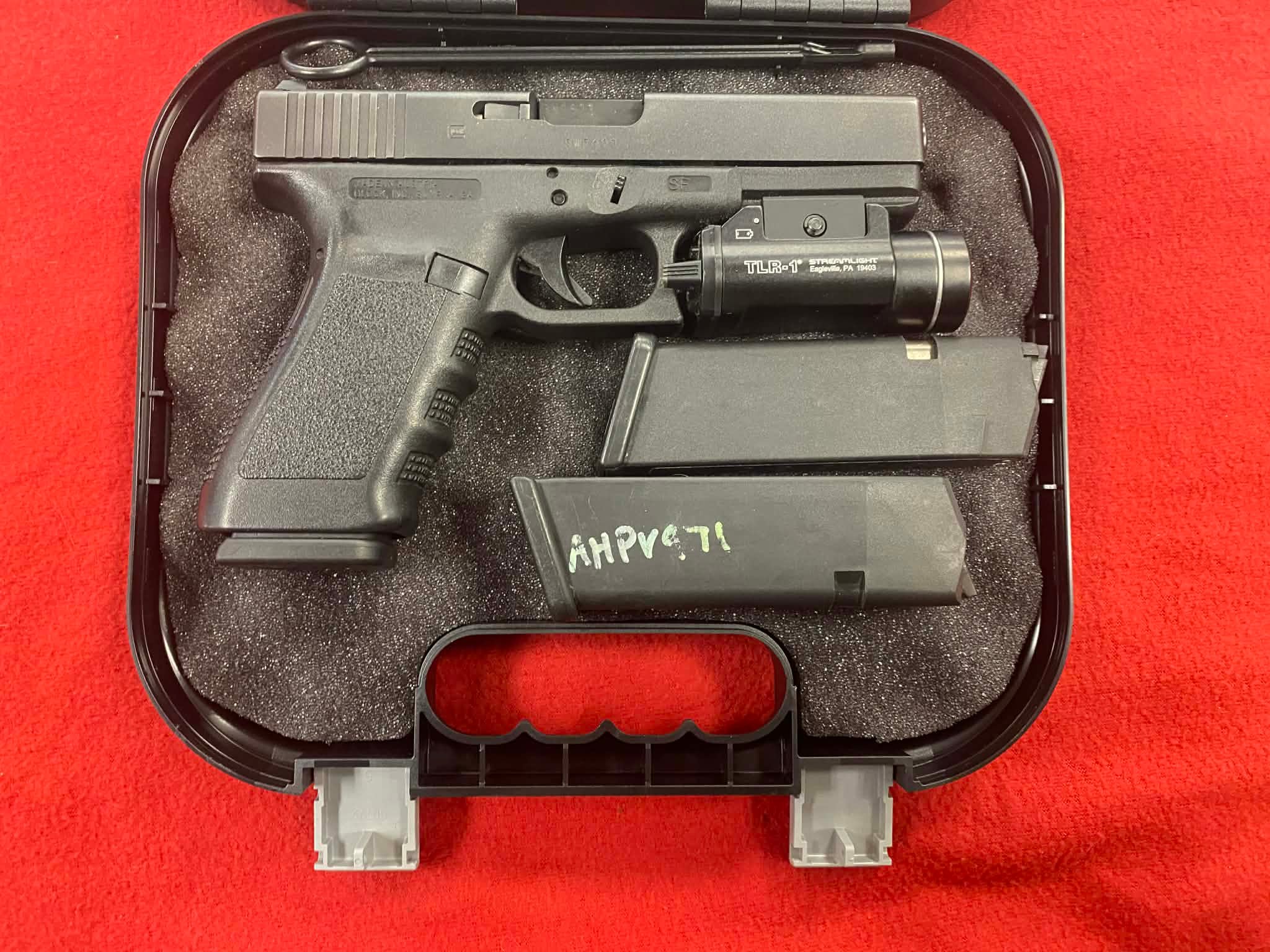
Most issued pistols spend far more time in a holster than on the range. An officer may carry the same gun every shift for years and fire it at qualifications a few times a year. The result is a common pattern: lots of surface wear, often fairly modest shooting wear. Some agencies trained hard and their guns saw heavy use. Some guns sat in a locker. You can't know which from the title alone.
Reading holster wear
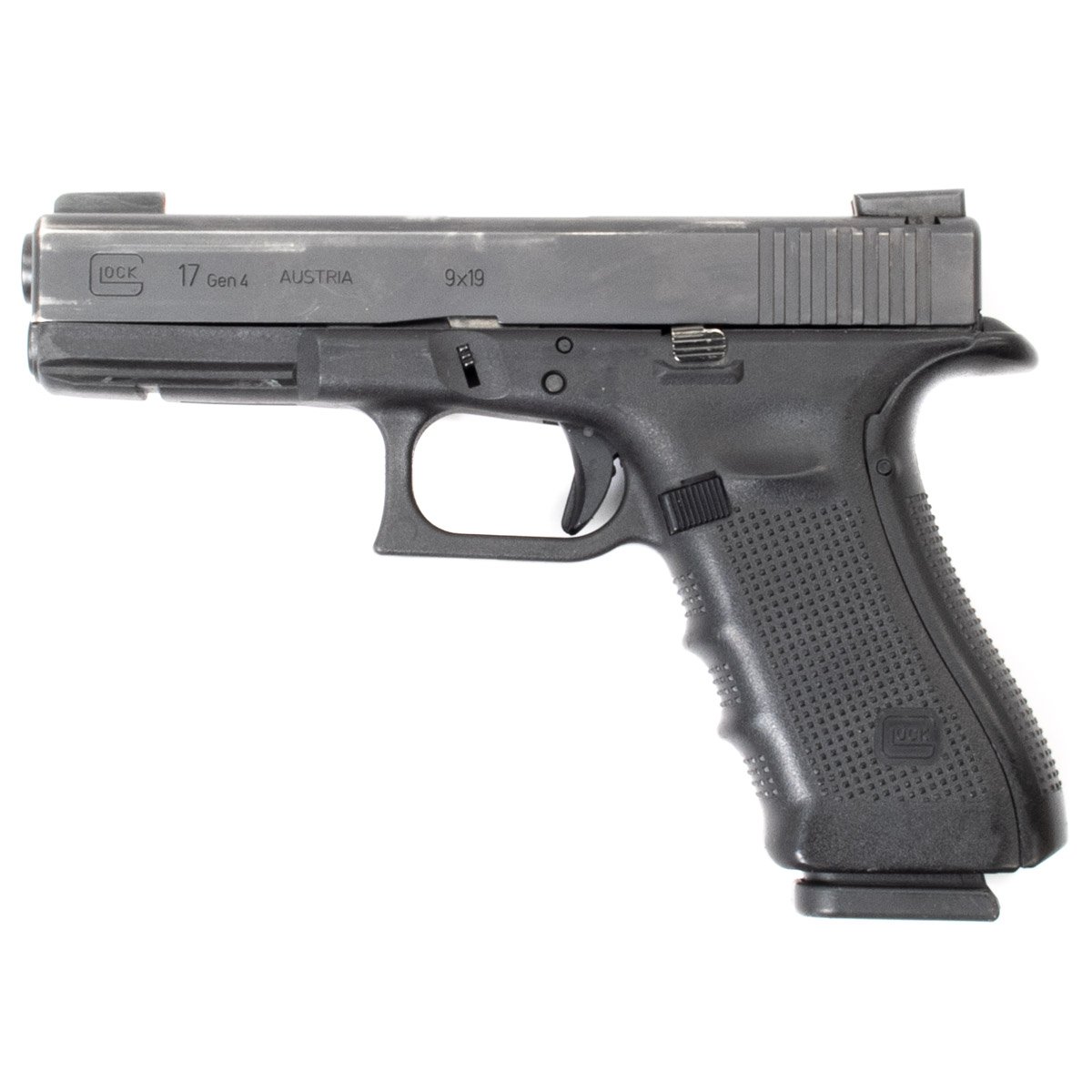
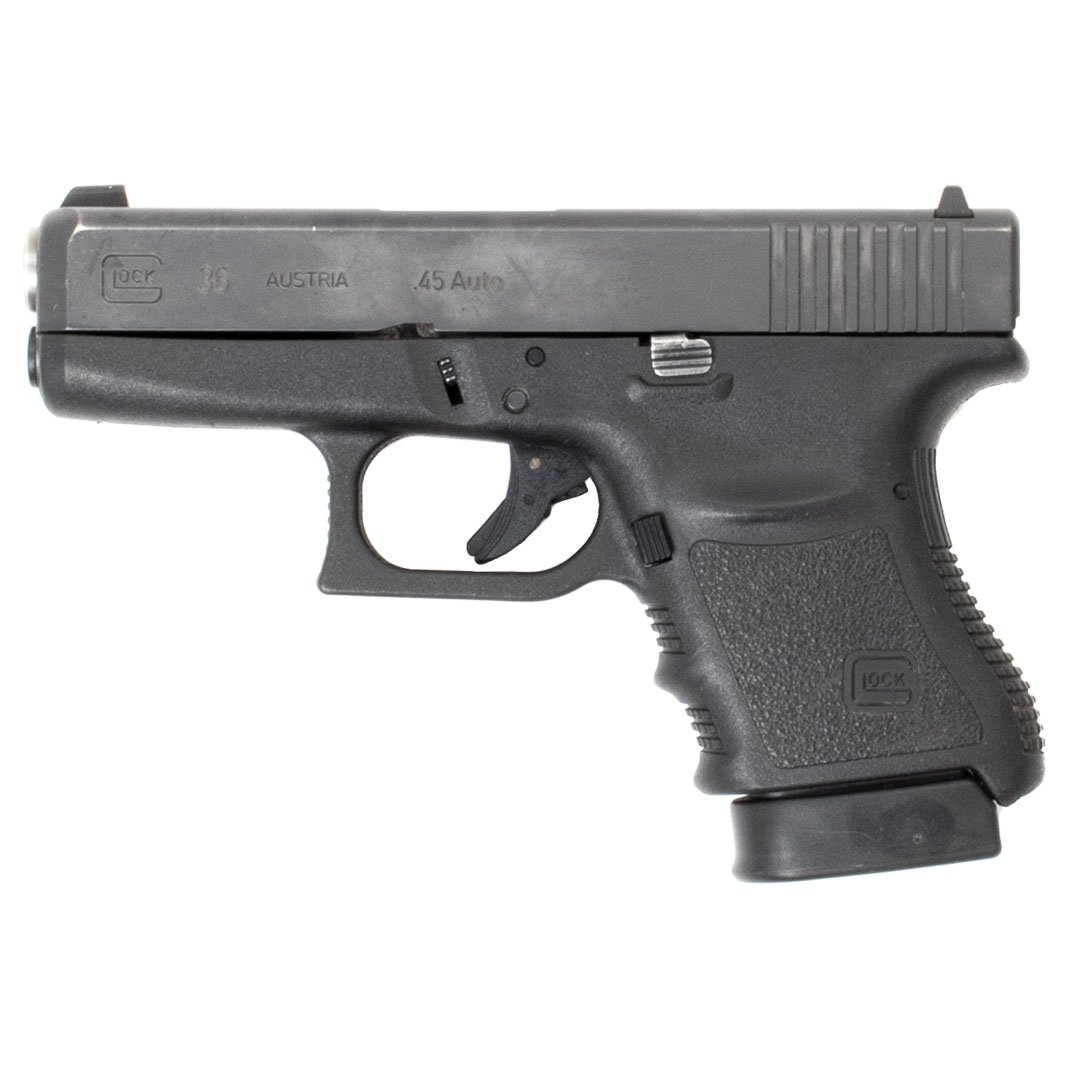
Holster wear comes from the gun rubbing against the holster as the officer moves, sits and draws. It shows in predictable places:
- The front of the slide and the muzzle
- The flat sides of the slide, near the front
- The top edges of the slide and the rear sight
- The edges of levers, such as a decocker or slide stop
- The front of the trigger guard and the dust cover
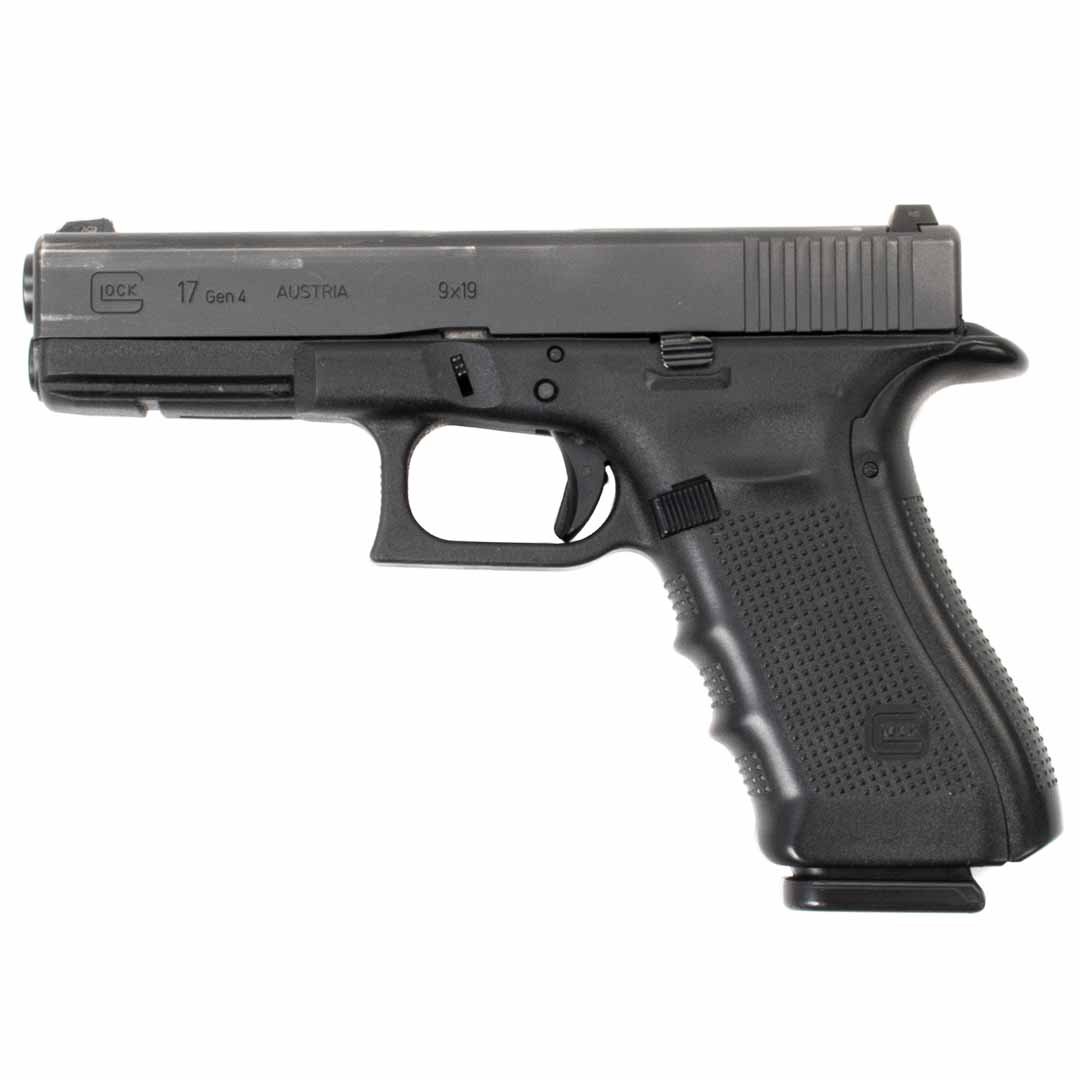
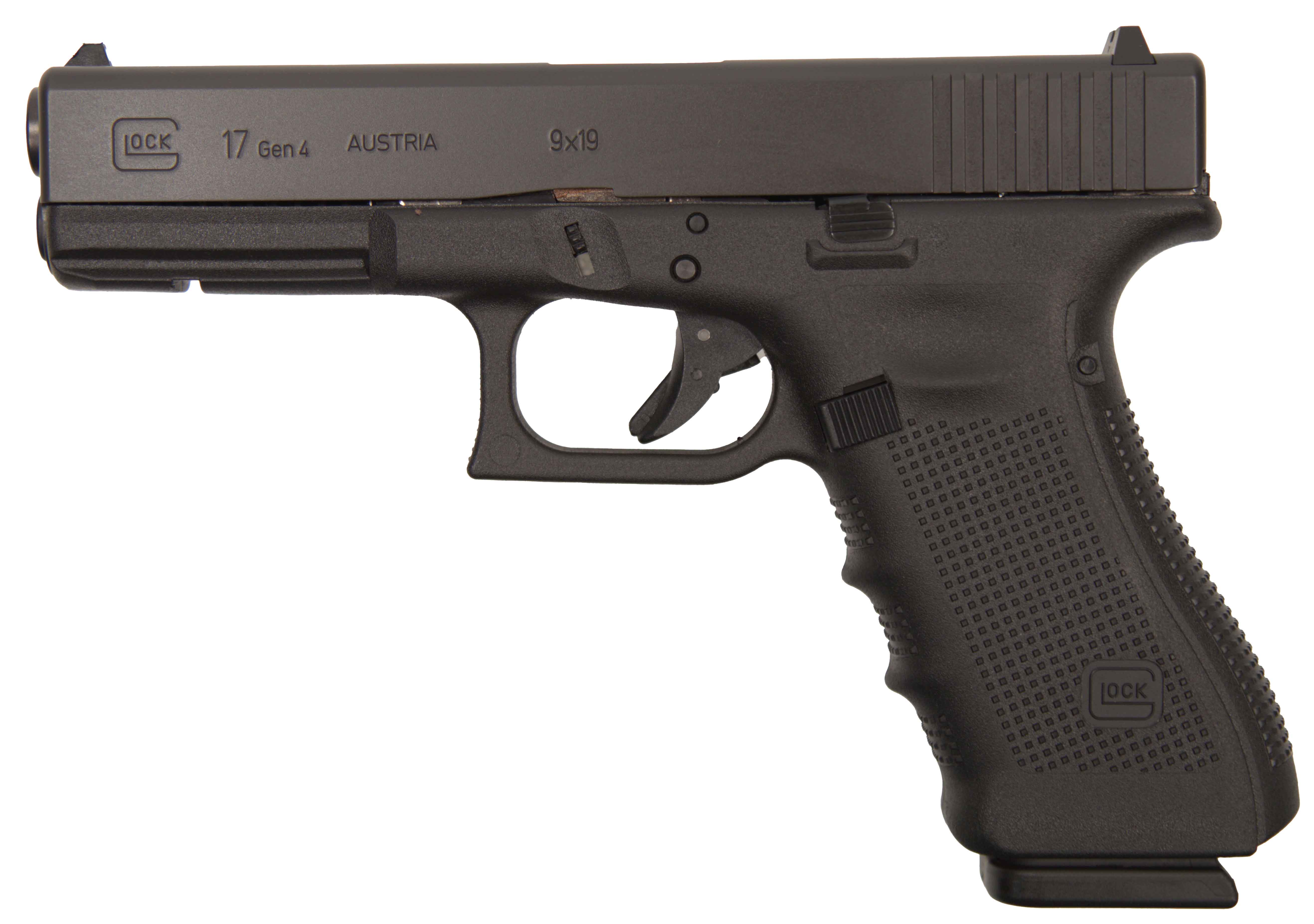
On a blued or black-finished gun, holster wear looks like silver or gray edges. On stainless, it looks like polished or dull patches. On polymer frames, it looks like shiny or smoothed texture.
Holster wear is cosmetic. It doesn't affect function. It is the single most common reason a trade-in costs less than a new gun. If you want a working gun at a fair price, holster wear is your friend.
Finish wear versus rust and pitting
This is the line that matters. Finish wear removes the coating. Rust attacks the metal underneath.
- Finish wear: smooth, bare or polished metal. Cosmetic.
- Surface rust: orange or brown film. Often cleans up, but ask about it.
- Pitting: small craters in the metal left by rust. Permanent. Light pitting on the outside is cosmetic. Pitting in the bore, chamber, breech face or on springs is a problem.
Duty guns can get sweat and rain on them, so look closely at grip areas, the rear of the slide and the area under the grips if photos show it.
Bore and crown
The bore is the inside of the barrel. A good bore looks bright with sharp rifling. A dark or frosted bore can mean wear, corrosion or just dirt. Ask the seller if the bore was cleaned before photos. The crown is the very end of the muzzle. Holster wear around the outside of the muzzle is normal. A dent or nick right at the edge of the bore can hurt accuracy. If a listing shows a clear bore photo, that is a good sign.
Springs and wear parts
Springs wear out with time and use. Recoil springs, magazine springs, hammer springs and firing pin springs are inexpensive and easy to replace. A gun with original springs from the 1990s should get new ones before you rely on it. Budget for this. Other common wear parts include extractors, locking blocks on some designs and grip panels. Each guide covers model-specific parts:
Night sights and tritium age
Many duty pistols wear tritium night sights. Tritium is a radioactive form of hydrogen sealed in small glass vials. It glows without charging, but it decays. Its half-life is about 12.3 years. A sight installed 12 years ago gives off roughly half the light it did new. One installed 25 years ago gives off about a quarter.
Some sights carry a date code. Many don't. A dim night sight still works as a normal sight in daylight. If low-light use matters to you, plan to replace old tritium. Don't pay extra for "night sights" on an old gun without knowing their age.
Agency markings and engraving
Some trade-ins carry engraved department names, badges, unit codes or property numbers. Some agencies ordered guns with factory markings. Others had armorers mark them later.
- Markings don't affect function.
- Some collectors seek out marked guns from well-known agencies.
- Other buyers want a clean slide and will pay less for a marked one.
- A listing that claims a specific agency is more believable when the gun or paperwork shows it.
"Box and mags" versus "gun only"
Read what is included. Trade-ins are often sold as:
- Gun only: no magazine. You will need to buy magazines separately.
- Gun and one magazine: the most common setup.
- Gun and two or three magazines: often how the gun was issued.
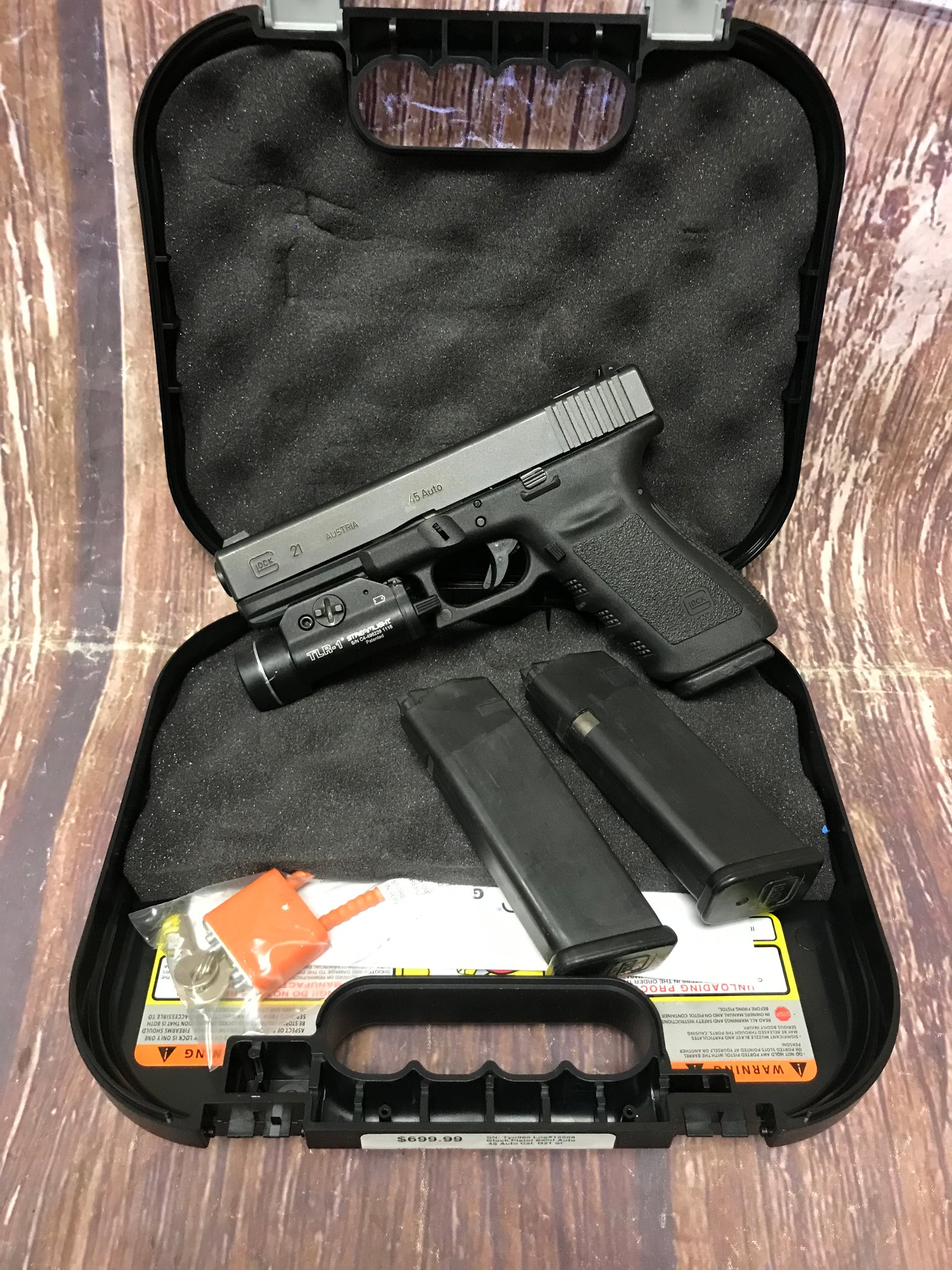
- Box and mags: factory box, manual and magazines. Rare on trade-ins, and it adds resale value.
Factory magazines are not cheap. Two extra magazines can change the real cost of the deal. Magazine capacity is also limited in some states. See our state law guide.
Round count: you can't know it
Nobody can tell you how many rounds a used duty pistol has fired. Agencies rarely track it per gun, and the paperwork doesn't follow the pistol. You can estimate from wear inside the gun: frame rails, barrel hood, locking surfaces and the breech face. Outside finish wear says more about holster time than shooting. Treat any exact round count in a used gun listing as a guess.
Questions to ask before you buy
- Is the condition shown in the photos the actual gun, or a representative example from a batch?
- How many magazines are included, and are they factory?
- Are there night sights, and do they still glow?
- Is there rust or pitting anywhere, including the bore?
- Are there agency markings?
- Has any part been replaced or modified?
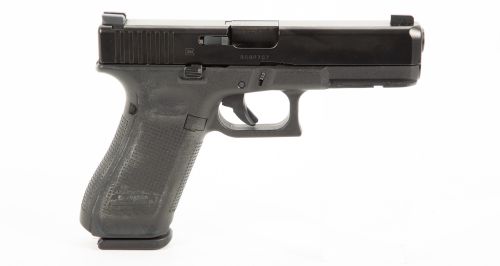
Batch trade-ins are often sold with representative photos. Your gun may look better or worse than the one shown. A listing should say when that is the case.
At the FFL counter
Your firearm ships to the licensed dealer you pick. There you fill out Form 4473 and the dealer runs the background check. Many buyers ask to look the gun over at the counter before finishing the paperwork. Dealers handle this differently, and each seller's return terms are different, so ask your dealer how they work before your gun arrives.
For this store, read our returns page for the policy that applies to your order and our shipping page for how transfers work. Don't fire the gun or alter it before you are sure you are keeping it, since that can affect a return.
Put it to use
- Browse current police trade-in listings and used firearms
- See all handguns in the shop
- Check what your state requires in buying a used handgun online by state
General information, not legal advice. Current as of October 2026. Laws change; check the official source before you act.